Eslováquia


Europa Viagem


População

Population: 5.4 million (July 2004 est.).

Pop. growth rate: 0.14 % (2004 est.).

Life expectancy at birth: 74.2 years.

Religions: Roman Catholic 60.3%, atheist 9.7%, Protestant 8.4%, Orthodox 4.1%, other 17.5%.

Ethnic groups: Slovak 85.7%, Hungarian 10.6%, Roma 1.6% (the 1992 census figures underreport the Gypsy/Romany community, which is about 500,000), Czech, Moravian, Silesian 1.1%, Ruthenian and Ukrainian 0.6%, German 0.1%, Polish 0.1%, other 0.2% (1996).

Language: Slovak (official), Hungarian.

Nationality: Slovak(s).


Slovakia Flag


Mapa Eslováquia


Mapa Europa


Links - Eslováquia

Slovak Tourist Board

Slovak News Agency

Slovakia.org

Bratislava Culture Centre

National Park Slovak Paradise

National park Low Tatras

Slovak Philharmonic

Slovak National Museum

Enjoyslovakia.com

Slovak National Theatre

Slovakia Travels.com

Bratislava Guide


Geografia

Country name: Slovak Republic (local: Slovenska Republika).

Capital: Bratislava.

Government type: parliamentary democracy.

Independence: 1 January 1993 (Czechoslovakia split into the Czech Republic and Slovakia).

Administrative divisions: 8 regions (kraje, singular - kraj); Banskobystricky, Bratislavsky, Kosicky, Nitriansky, Presovsky, Trenciansky, Trnavsky, Zilinsky.

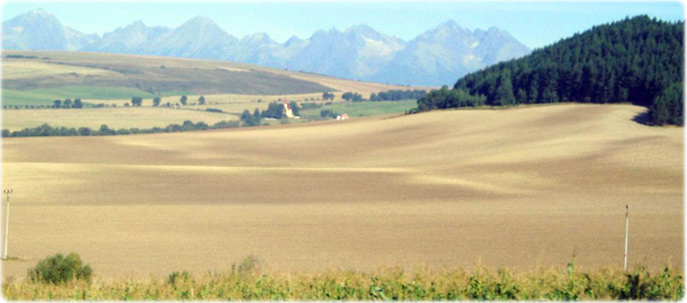
Terrain: rugged mountains in the central and northern part and lowlands in the south. Tatra Mountains in the north are interspersed with many scenic lakes and valleys.

Total area: 48,845 km².

Highest point: Gerlachovsky Stit 2,655 m.

Climate: temperate; cool summers; cold, cloudy, humid winters.

Ports and harbors: Bratislava, Komarno.


In 1918 the Slovaks joined the closely related Czechs to form Czechoslovakia. Following the chaos of World War II, Czechoslovakia became a Communist nation within Soviet-ruled Eastern Europe.

Soviet influence collapsed in 1989 and Czechoslovakia once more became free. The Slovaks and the Czechs agreed to separate peacefully on 1 January 1993. Slovakia joined both NATO and the EU in the spring of 2004.


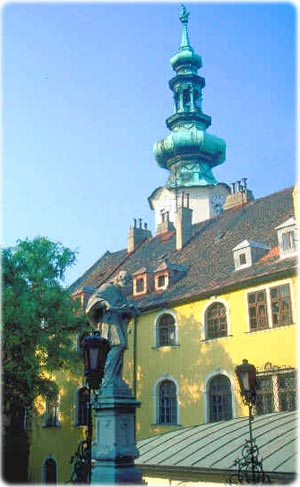
Bratislava, Slovakia

Main source: CIA - The World Factbook 2004.


Economia

Slovakia has mastered much of the difficult transition from a centrally planned economy to a modern market economy. The DZURINDA government made excellent progress during 2001-03 in macroeconomic stabilization and structural reform. Major privatizations are nearly complete, the banking sector is almost completely in foreign hands, and foreign investment has picked up. Slovakia's economy exceeded expectations in 2001-03, despite the general European slowdown. Unemployment, at an unacceptable 15% in 2003, remains the economy's Achilles heel. The government faces other strong challenges in 2004, especially cutting the budget deficit, containing inflation, and strengthening the health care system.

Currency: Slovak koruna (SKK).

GDP (purchasing power parity): US$ 72.29 billion (2003).

GDP per capita (purchasing power parity): US$ 13,300 (2003)

GDP growth rate: 3.9 % (2003).

Unemployment rate: 15.2 % (2003).

Industries: metal and metal products; food and beverages; electricity, gas, coke, oil, nuclear fuel; chemicals and manmade fibers; machinery; paper and printing; earthenware and ceramics; transport vehicles; textiles; electrical and optical apparatus; rubber products.


Bratislava. St. Michel's Tower in the background.


Bratislava


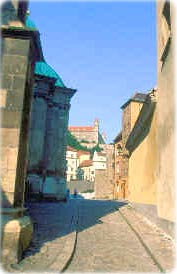
Bratislava, capital of Slovakia.


Bratislava, capital of SlovakiaBratislava architecture

Copyright © Guia Geográfico